The Art of Being Mediocre
and
the Ripples It Leaves Behind
Last week, I wrote about stepping away from social media, which I have done. What I didn’t anticipate was that this break would allow me to have space to think more clearly about what I am doing, why I am doing it, and what I want to do next.
This year has held some of the widest emotional extremes I can remember. My close friend and mentor of 30 years passed away at 93 years of age. I broke my collarbone in an accident that required surgery and months of physical therapy. I lost a close friend to suicide. I was invited to be the Keynote speaker for College Orchestra Directors Association where I spoke about “The Ripple Effect: Confidence, Talent, and Opportunity in Orchestral Leadership.”
Through it all, one belief has continued to surface: ripple effects are real. They travel farther than we expect, and they shape lives in ways we may not immediately see.
Music education, at its core, is often described in technical terms - tone, intonation, rhythm, ensemble. But what it truly builds goes far beyond that. It builds people.
It teaches collaboration and communication, risk-taking and resilience, confidence through preparation and performance. It teaches how to listen, not just to yourself, but to those around you. And, maybe most importantly, music teaches people how to belong. Rehearsal spaces are places of inclusion where people are seen. Musicians are challenged, supported, and given the opportunity to grow, not just as performers, but as people.
For years, I have believed deeply that those of us in music have both a responsibility and an opportunity to make a real difference in our communities. What’s interesting is that I have not always been comfortable saying that out loud. It has taken me a long time to believe I might be “good enough” to talk about the work I’ve done.
Somewhere along the way, growing up, I learned and kept reinforcing stories that led me to believe I was… mediocre.
I was told I started violin too late at age 12 and would never catch up. I was removed from an advanced learning program because I talked too much. I didn’t end up at the conservatories I had dreamed about, in part because I didn’t know how to navigate how to get there or how to pay for them.
I must not have been that talented.
Over time, these experiences built my narrative. But, here’s the thing about narratives: they are not always true. What they are, though, is powerful. They shape how we see ourselves and how we move through the world.
For me, that narrative didn’t just push me toward proving myself – it pushed me toward investing in others. Towards trying to be the teacher or mentor I wished that I had.
And this brings me to Jalayne.
Before embarking on my conducting career, I taught orchestra at Roosevelt High School in Seattle alongside my dear friend Scott Brown. We built something special there—a program known nationally, filled with students who went on to top conservatories, major orchestras, and successful careers in all kinds of fields.
Many of those students shared similar backgrounds: supportive families, financial stability, access to private lessons and high-quality instruments. These students were talented, absolutely, but they were also positioned to succeed.
And then there was Jalayne.
She did not fit into this category.
When her particular class entered, I knew that two exceptional violinists would be entering my class as well as several other strong students. I was looking forward to four years of extraordinary talent and strong leadership. What I did not anticipate, was how this particular class – and Jalayne in particular, would fundamentally reshape how I understood talent, access, and opportunity.
Jalayne was a cellist with a big personality - vivacious, talkative, and impossible to ignore. My first lasting memory of her was watching her drag her school cello across the floor after our first rehearsal.
I remember thinking, “Oh my gosh…. Here is a student who is not grateful that we had provided a loaner instrument for her to use. She needs to prove that she can take care of equipment before she gets anything from me.”
So, I gave her the worst cello. Scratched. Worn. Visibly inferior.
I told myself I was teaching responsibility.
What I was actually revealing was my own blind spot.
That reaction is one I carry with me—not with shame, but with clarity. Because it marked the beginning of one of the most important lessons of my life as a musician, educator, and advocate of diversity.
Over the course of the year, Jalayne grew on me. She was funny, engaging, bright. But she was also frustrated. She wanted to improve, yet she struggled to move up in the section. Her instrument didn’t help. Her access didn’t help.
She asked me, again and again, to help her find a private teacher. I gave her referrals. Nothing materialized.
Eventually, I began to understand why.
She lived with her mother, a single parent. She didn’t own a cello and couldn’t practice at home. Private lessons were financially out of reach. And still - she showed up. She stayed after school. She kept trying.
Then I learned she had been couch-surfing for months. She was commuting nearly two hours each way by bus just to stay at Roosevelt - to stay in the orchestra program.
Let that sink in.
Two hours to school each way, living in unstable housing, and still, she chose to show up.
Jalayne was not AT ALL on my possible “future professional musician” radar. I hadn’t even seriously considered that she might pursue music beyond high school. But her determination and her circumstances ignited something in me.
I contacted a fabulous teacher, Rajan Krishnaswami, who generously agreed to teach her. We found a better instrument and Jalayne began lessons at the end of her sophomore year.
The difference was immediate. Something incredible was happening.
Let’s step back for a moment. During this time, I was deep into my dissertation research on gender and leadership in conducting. Questions about access and who gets to succeed were no longer theoretical for me. They were personal and they were urgent.
How important was it to offer Jalayne this opportunity - even this late in the game?
Was she really “talented enough” to pay for lessons?
Would it actually make a difference for her in the long run?
Jalayne became the rock in my pond that sent ripples all the way to the water’s edge. Actually, she became a boulder.
Jalayne forced me to confront how I was seeing students and how much of that vision was shaped by assumptions rather than ability.
She changed how I listen. How I teach. How I define talent, excellence, and potential.
Here is what I now know: Talent is not rare. Access is rare.
When I think about that class, I see three students who could not have been more different. Two who had early training, strong financial support, and clear pathways. And Jalayne - who had to work exponentially harder for the same opportunities.
Not because she lacked ability. But because of circumstances beyond her control.
Race matters. Finances matter. Exposure matters. Family stability matters. Opportunity matters.
These are not small factors. They are structural realities.
My story of Jalayne is one example of thousands of potentially talented kids. But her story has changed mine. It has moved my commitment to equity and inclusion from an idea to a practice. From something I believed to something I actively work to build because the ripple effect is real.
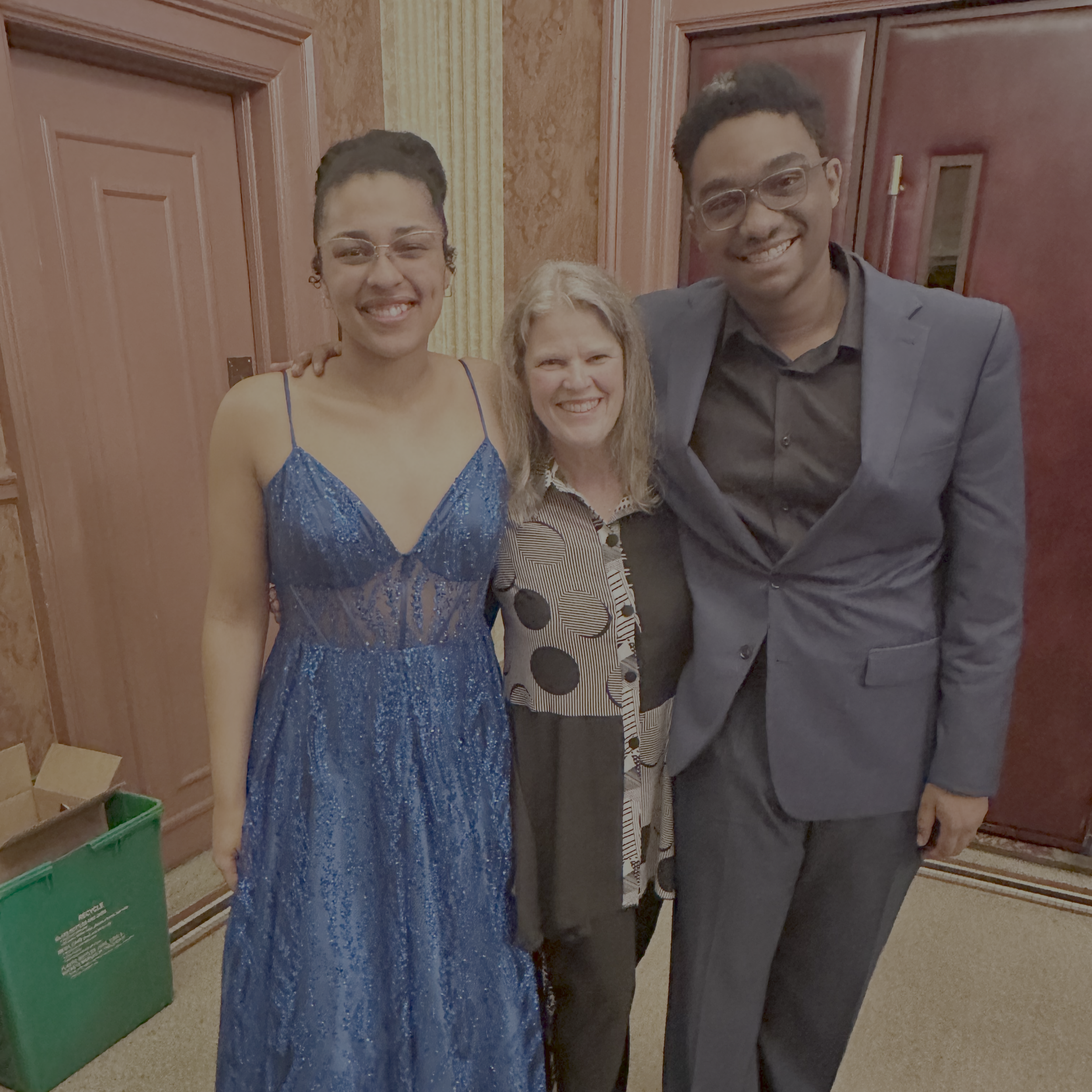
Tonight, Jalayne will perform the co-premiere of Joe Jaxson’s cello concerto Anchored, a piece written for her. I am sitting in my hotel room, reflecting on that journey.
I am excited. I am nervous. I am deeply proud.
This is why I do this work.
Not because of a single performance or a single moment, but because of what happens over time when we choose to invest in people.
When we pay attention to the musicians in our rehearsal rooms, the families in our audiences, the communities we serve - our impact does not stay contained.
It travels outward.
It reaches people like Jalayne.
It creates access where there was none.
It opens doors for extraordinary talent to be seen and heard.
And it reminds me that making a difference does not require perfection.
Today, I am proud of being just Anna and of making a ripple in my world.